
The process
Waste recycling of the latest generation
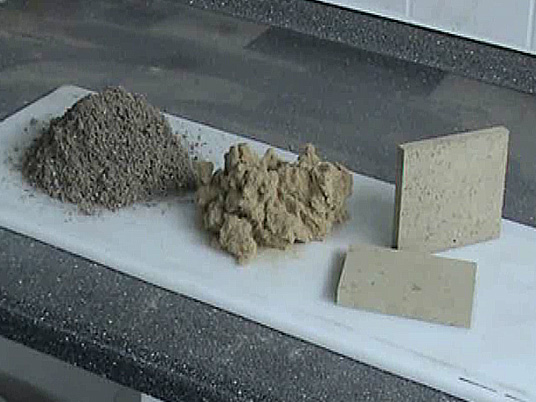
For the first time, ECOCYCLING provides a completely safe process which neutralises waste and returns it to product and economic cycles as a valuable, hazard-free raw material.
Slowly, the view is gaining ground that waste is a valuable raw material for which sensible uses should be developed. However, the waste disposal methods used today, such as incineration or landfilling, do not make use of this idea and lead to a considerable environmental risk due to the resulting by-products such as waste gases, slags or leachate water – not to mention the poor acceptance among the population. Only sorting shows a partial use of the resources contained in waste.
Creating valuable raw materials from waste, that is, combining ecological usefulness with economic dynamism – this is the new and exciting concept of ECOCYCLING.
The ECOCYCLING process is the first working process to convert sorted or unsorted waste into saleable products. It makes it possible to completely replace landfilling and incineration and to process the waste almost completely without harmful by-products at relatively low investment and operating costs.
up to 1,000 t
product output per day (stationary plant)
0
external energy input required by the process
< 2 mm
grain size after shredding
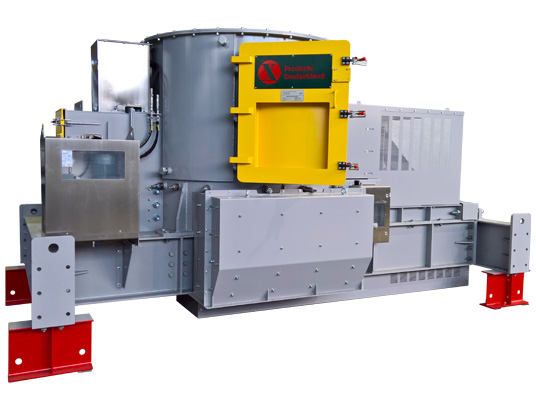
The ECOCYCLING plant at a glance

The process
How does ECOCYCLING work?
The following is a simplified view of the phases in which the process runs. The process requires no external energy supply. It takes place at local, atmospheric pressure conditions. The energy required for the process comes from the reactive elements of the additives and from the waste itself.
Stage 01
Sorting & material input
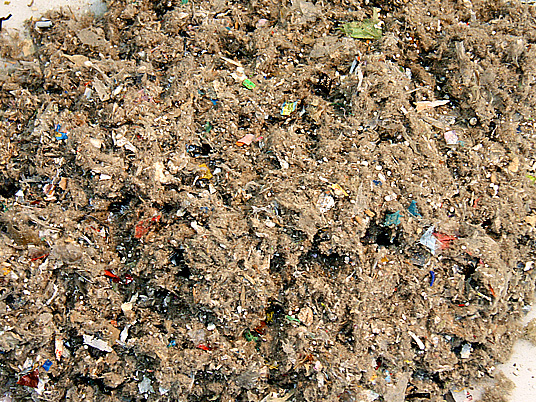
If necessary, the material is pre-shredded to 300 × 300 mm and then fed as a mass flow. Sludge is fed separately, depending on the need for treatment.
Advantages
What are the advantages?
The ECOCYCLING process developed by Xproducts Deutschland GmbH breaks entirely new ground. Its decisive advantages over all currently known waste recycling processes:
The process works with sorted and with unsorted waste and/or sludge.
The process turns the waste into a new product.
The environmental hazard potential present in the waste is generally eliminated completely.
Investment costs are far below those of, for example, incineration.
The process produces neither waste gases nor waste water nor residues that have to be disposed of.
The technology used is simple and very easy to maintain – with a marketable product at the end.
Are you planning a specific project?
Send us your information in advance. Our experts will get back to you as soon as possible.